Echoes from the White Cube: Beyond time's structure
And a story about changing paths
March 2026Like many other women in corporate living in London, I like to indulge in the occasional Sunday art escapade. We all know the aesthetic - sunny day, a warm cup of tea (much to everyone’s absolute shock I don’t drink coffee despite working in banking), and walking around Central London to see the latest free exhibitions. Last Sunday, I had the pleasure to do exactly that; take a much needed moment of respiro and eagerly inhale some art, with the thirst of someone who’s craving more creativity, art and colour in her life, but is trapped in a white cube.
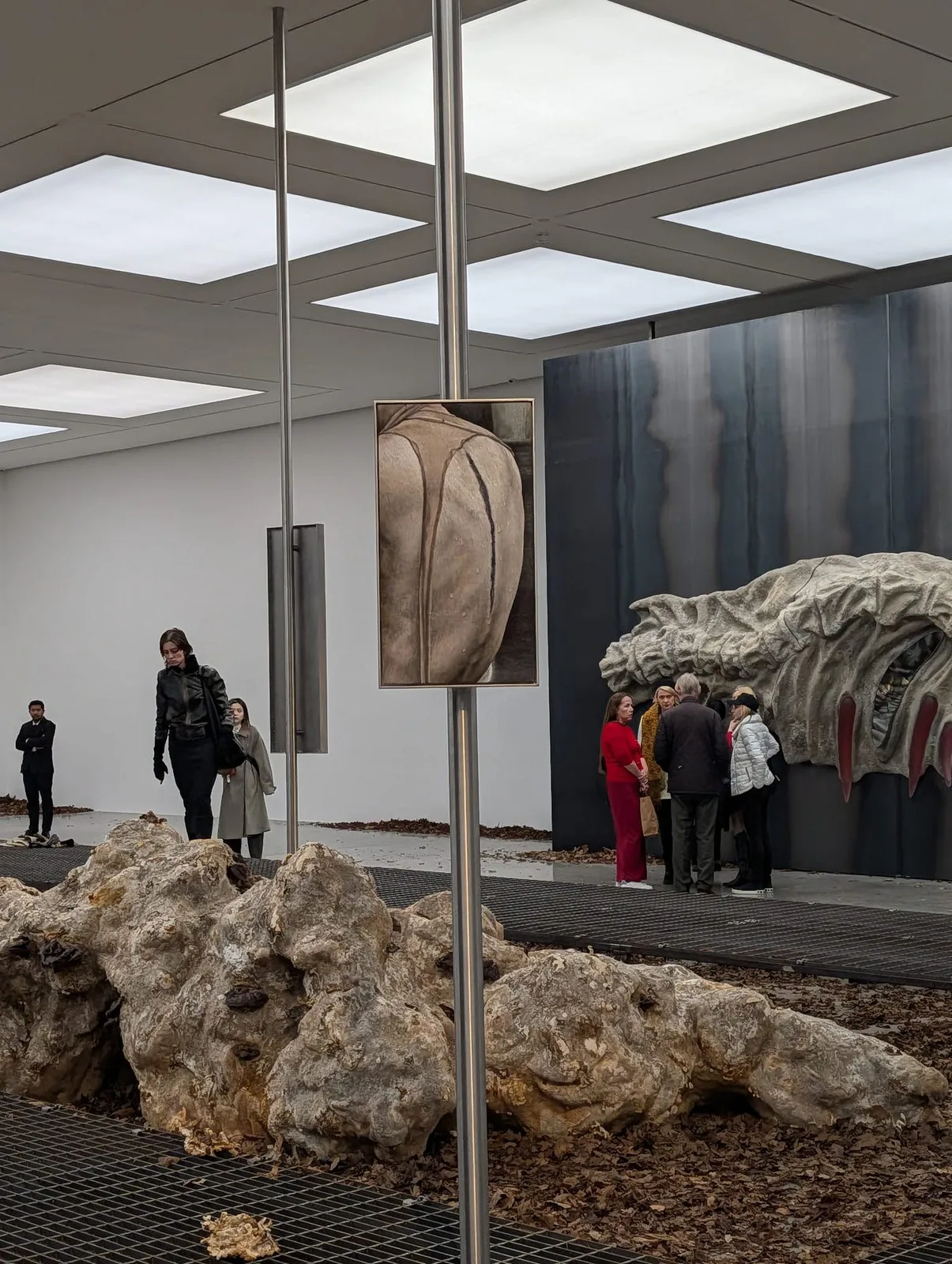
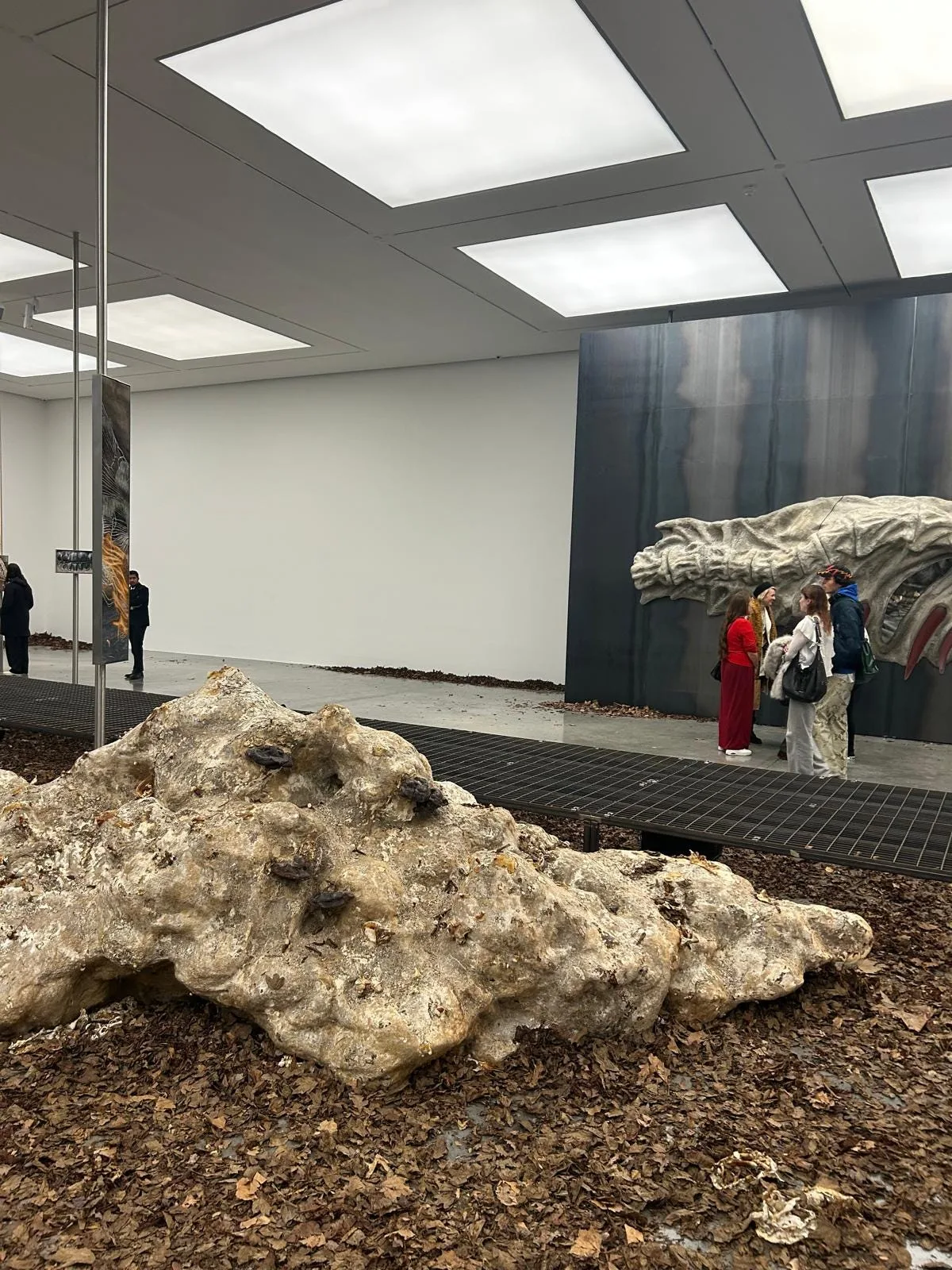
I stepped into White Cube on Bermondsey Street with no expectations of what I was about to visit. Until the 29th of March 2026, the gallery is offering its space to a few unique exhibitions, including Echo by Klára Hosnedlová, an immersive-environments creator based in Berlin. I’ve never heard of her before, but her art is described as a blend between traditional craft, digital aesthetics, and science fiction, themes that immediately captivated me. I entered the main room and my initial thought was “It’s going to be another abstract piece of art which you can only truly enjoy if you grasp at straws long enough to find deeper meaning in the smallest things”. I quickly changed my mind. The art doesn’t reveal itself to you at first - you walk into a wide white room, with dead leaves covering the floor, bone-like structures spread around and bigger ones on the wall. Eerie, almost metallic sounds that reverberate through your body flood the room. Yet, within minutes, you begin to understand the environment.
My own environment has been shaken by a certain dissonance lately. I used to find comfort in the neatly paved path in front of me. The margins were clear. The direction was set. So I ran, never daring to look at the world blurred outside my peripheral vision. I kept running for a while, feeling more and more tired but invigorated by the dream of making it to the end. Oh the sweet end of it all, where I can finally stop running. However, cracks started to form in my porcelain fantasy, as not long after I was faced with a brutal reality - there is no end. The path is endless and there is no real reward waiting at the finish line. The expectation is to get used to the gray pavement and the tiresome running and slowly accept it as it’s always been part of your life. You learn to turn off your mind and just keep going. But that’s it; nothing’s more exciting than this. And unfortunately I’m not much of a runner.
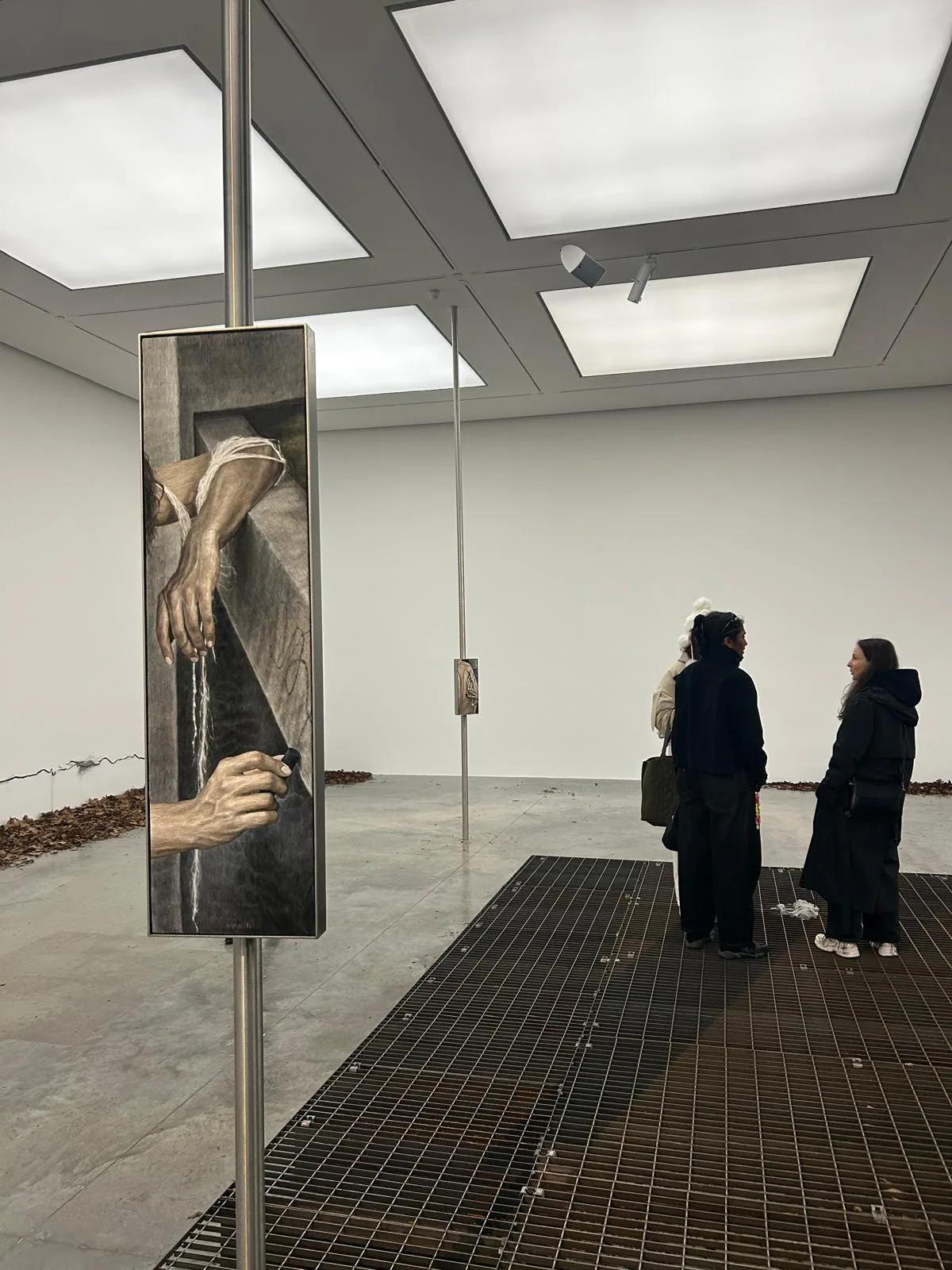
My eyes darted across the various shapes in the room. The installation poses as an atemporal space where past, present and future bleed into each other: bronze leaves and bones to suggest the unforgiving passing of time, paintings of people with wooden instruments, fire and body paint to suggest evolution, archaic and current elements of humanity, and metallic structures and robotic sounds to transport you into a dystopian future universe. The bones and leaves cover the metallic structures to show the symbiosis between death and permanence.
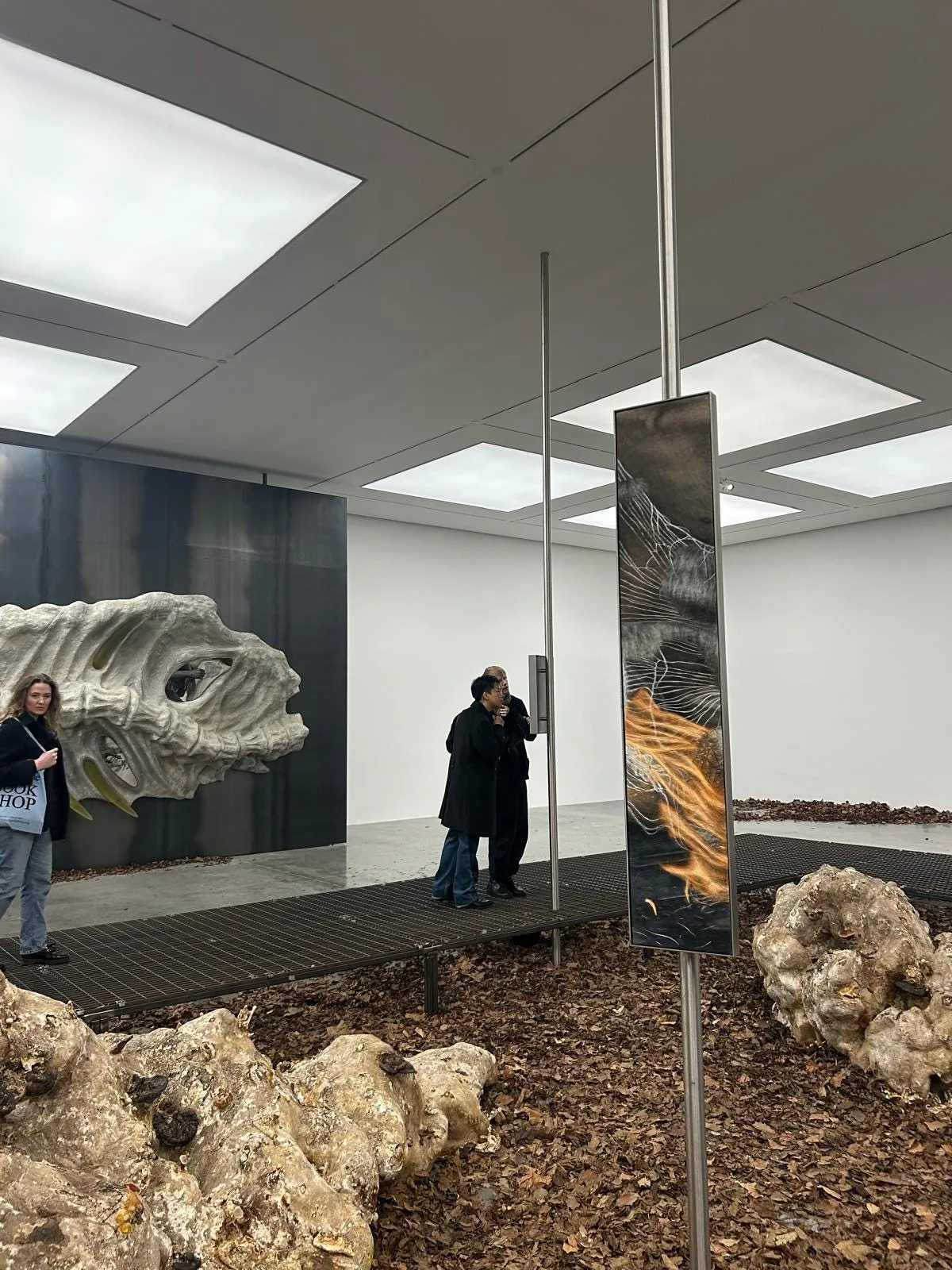
I found myself thinking that the artist could have added thick rust on the metallic structures, though perhaps oxidised metal would have compromised the safety of the installation—or perhaps, that wasn’t the point. The metal gantry was constructed as a square perimeter surrounding the central pieces: massive, mushroom-covered rocks alongside paintings of people and fire. This sturdy, stainless structure, arranged in its cyclical path, seemed to stand as the only unshakable truth in the room: a representation of the infinite cycle of time, encircling elements that vary from withered and dying to vibrant and alive.
I used to have a vibrant and alive mind, going as far back as my memories allow. I remember having a notebook where I would write and doodle the entire day. I was terrible at drawing, but that was never the point. I liked to bring to life a myriad of ideas. My tiny head was buzzing with them: a house where each one of the rooms is a different world, a dress that changes shape if you pull a string, an immaginary world where all the people were ant-sized. I made up songs and wrote poetry. I was obsessed with taking in the world around me and turning it into caricatures and made up concepts. Even before I could hold a pen, my mind spun to make up stories. I would spend hours telling them to anyone who would listen: to my parents, other kids in kindergarden, playmates, and if there was no one around, to myself. My parents were quite puzzled, their concern for all of this time spent talking to myself growing. They tried to get me to stop. My grandma saw past this impression. She didn’t discourage me, but bought me a voice recorder. I recorded up to 14 chapters of this story that was consuming my brain. My grandma spent hours typing the entire story on her computer, listening tirelessly to the recordings. She printed it for me too, but the pages got lost years later.
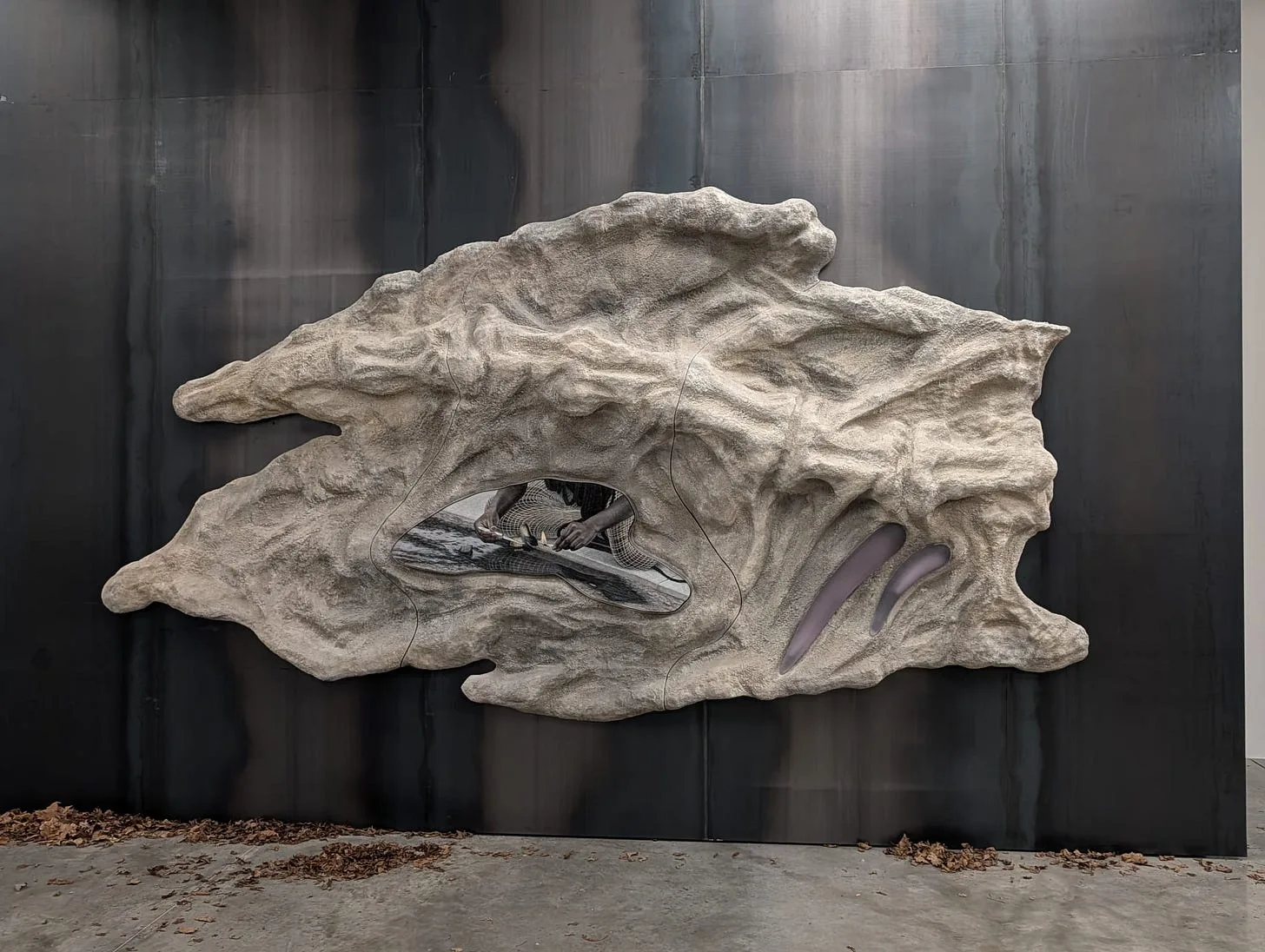
Time is represented beautifully by the massive bone fragments on the wall. The narrow paintings encased in them were nearly impossible to decipher. It almost seemed as you’d be peering out from inside an animal carcass, catching glimpses of pre-historical people through a cage of ribs. The artist didn’t want us to see everything, keeping the privacy of our ancestors stuck in this atemporal place. They were going about their lives undisturbed and fuelled by the thirst for knowledge, while our knowledge remained obstructed. She obtained exactly what she wanted - our curiosity and interest. The paintings by themselves were beautiful and evocative. Grainy dark skin against white and thin fabrics alongside spider webs, torches and butterflies.
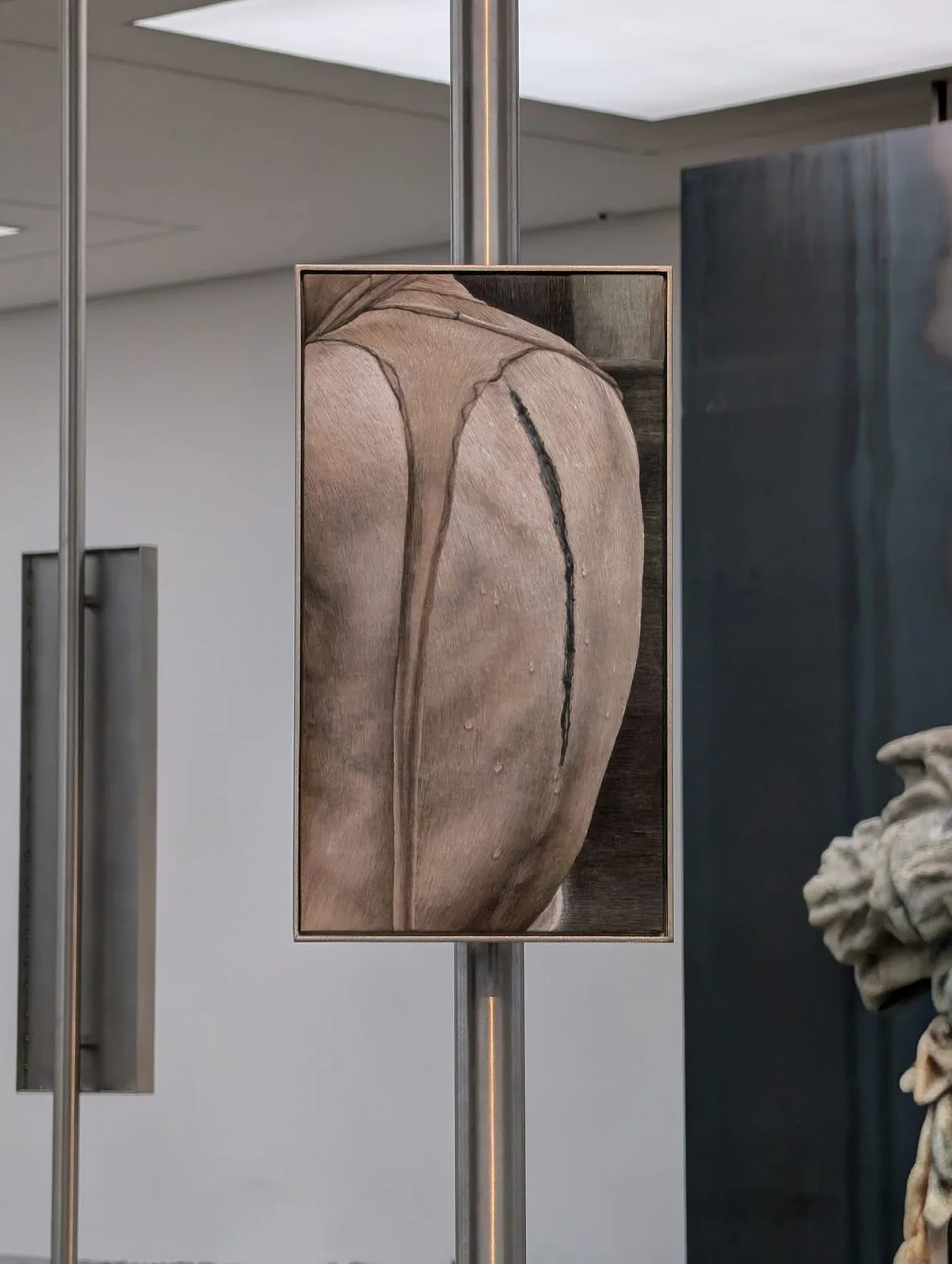
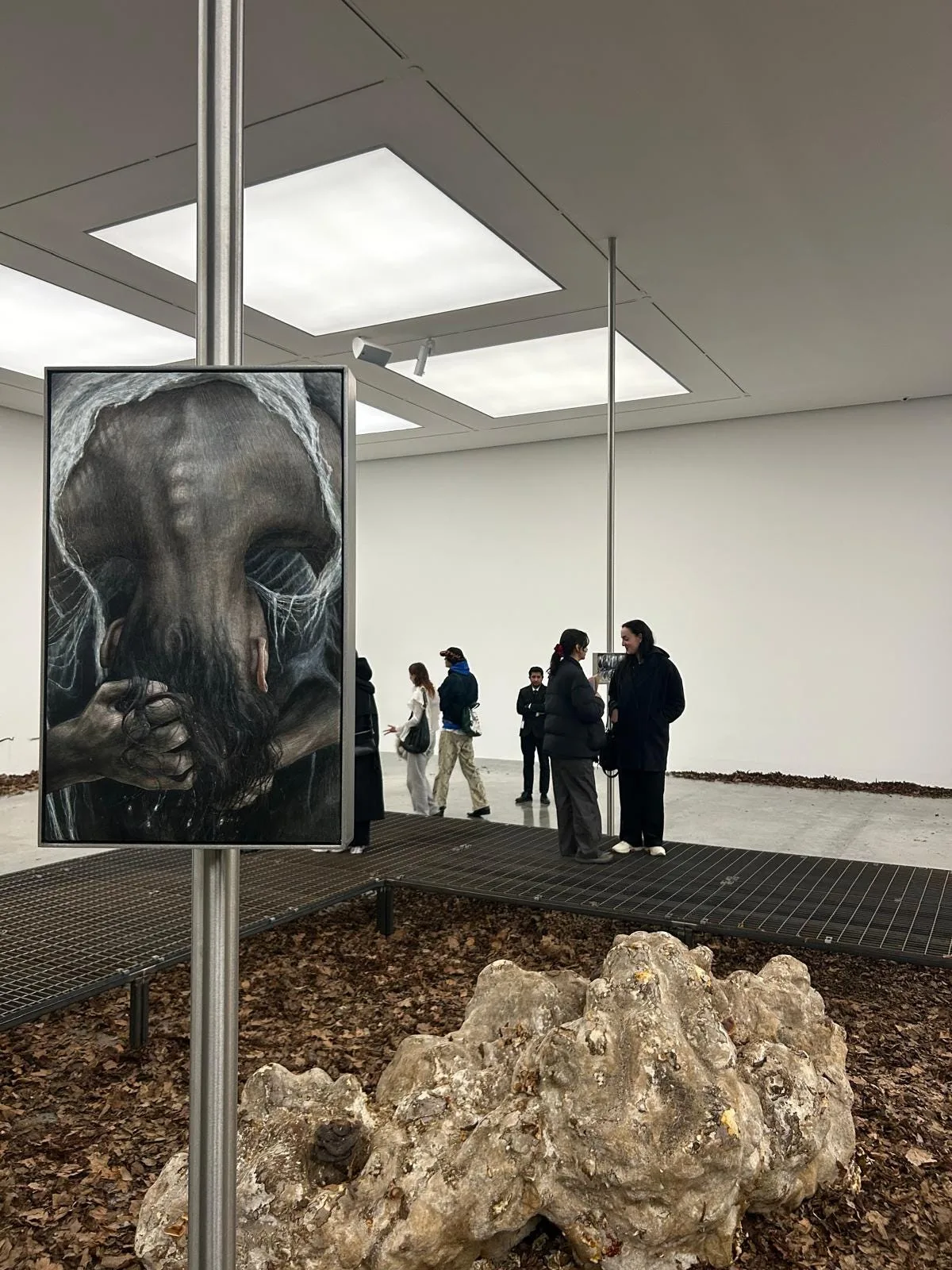
The bone structures hung on discoloured, uneven black walls. I didn’t notice them at first until I realised they were a very intentional part of the installation, of the concept, like everything else. Me and my partner had a short debate on it. To him, the walls were a cold, industrial motive, an element forged by humans to look this way. They were showing the juxtaposition between impacted by humankind and natural; a striking contrast beween two opposing planes of existence. I looked at the walls differenly - the aftermath of something that naturally decomposes until one can’t really tell what was there before or for which purpose. Still standing, but showing no signs of what it used to be in another life, completely transformed other. I liked how we both seen the same colours, materials and shapes, yet were experimenting them in such different ways.
In a way, that’s how I felt about my inclination towards art too: a creative mind which got supressed in time, both by external influences and personal surrender. A shame, really. A child with such a colourful mind and love for writing, music and creation… through what madness would one have to go through to push them towards mathematics and business? My memories are quite blurred. What’s certain is that eventually, I myself started to sink into the madness. I stopped writing and taking music classes. I went to business school. I got good grades, I networked, I embraced this world. I got my first corporate job. Then the second. During the first one I was too young; ignorant in my understanding of why this lifestyle was causing such pressure in my chest. The second brought a painful certainty - it was never about my insufficient sleep time, challenging deadlines or being in the wrong department. My soul was aching and yearning for the creative industry and the pain I was feeling was not the norm, it was my artistic mind suffocating in the wrong place. An entire life built on a concrete pedestal was crumbling as I got closer and saw that the cement was nothing more than sand, forced into a seemingly solid shape by years of applied pressure.
“Echo”, presenting itself as an unassuming display at first, feels almost like a fever dream, a voice from the past bouncing and vibrating between the walls of the installation. A time-travel experience where you’re forced to meditate on beauty, decay, and the beauty of decay. Klára Hosnedlová is known to take elements from previous exhibitions and transform them into new artworks, her art becoming a continuous narrative arc, a singular concept that simply morphs, not ends. Echo, having been my first and only display of hers I’ve seen, only shows me one facet of her fascinating world. My excitement to see more and more until understanding the full cohesive narrative is inexplicable. She constructs a universe that functions as an open invitation, a promise that this narrative will continue to unfold into the future. Submerging myself in her vision was a vital respite from the mundane, a visceral reminder that my new journey is not a detour, but a homecoming. To the outside world, abandoning a pre-determined course for the creative unknown may look like madness; yet, that noise fades the moment I hear the child within me cheering, slowly and quietly freeing myself of the gray path.