Beyond the Seams of Conformity
And a story about a young woman's relationship with fashion
February 2026As an avid couture enthusiast, visiting Florence in February 2026 during the Balenciaga and Alaïa exhibition has been a dream. Completely unplanned too. I saw a flyer about it the second I stepped in my first Italian bus once I arrived from the airport. Knowing my new-found obsession with Balenciaga, my partner agreed to get tickets immediately.
I haven’t always felt such passion for fashion. I would say that during my teenage years I didn’t have an interest in garments at all. No taste either. Once I left Romania and the bubble of ignorance I was living in, I started to see it. It wasn’t even about fashion shows back then; I was a student after all. It was about the people walking past, in baggy jeans and vintage leather and so many accessories. I felt profound admiration, although the more appreciative I was, the more insecure I felt with my own clothes. Nothing about myself and my wardrobe felt right. The mission of curating a style of my own, efortless but eye-catching at the same time, felt like the greatest challenge in the world in the absence of experience and knowledge.
We were immediately faced with a challenge, as the exhibition was in Prato, next to Florence, and for whomever travelled to Italy, the public transport is not the most forgiving. We woke up late and almost didn’t make it in time, although the desire to see it sent us running frenetically on cobblestone, through an endless mass of tourists, trying to get the closest cab.
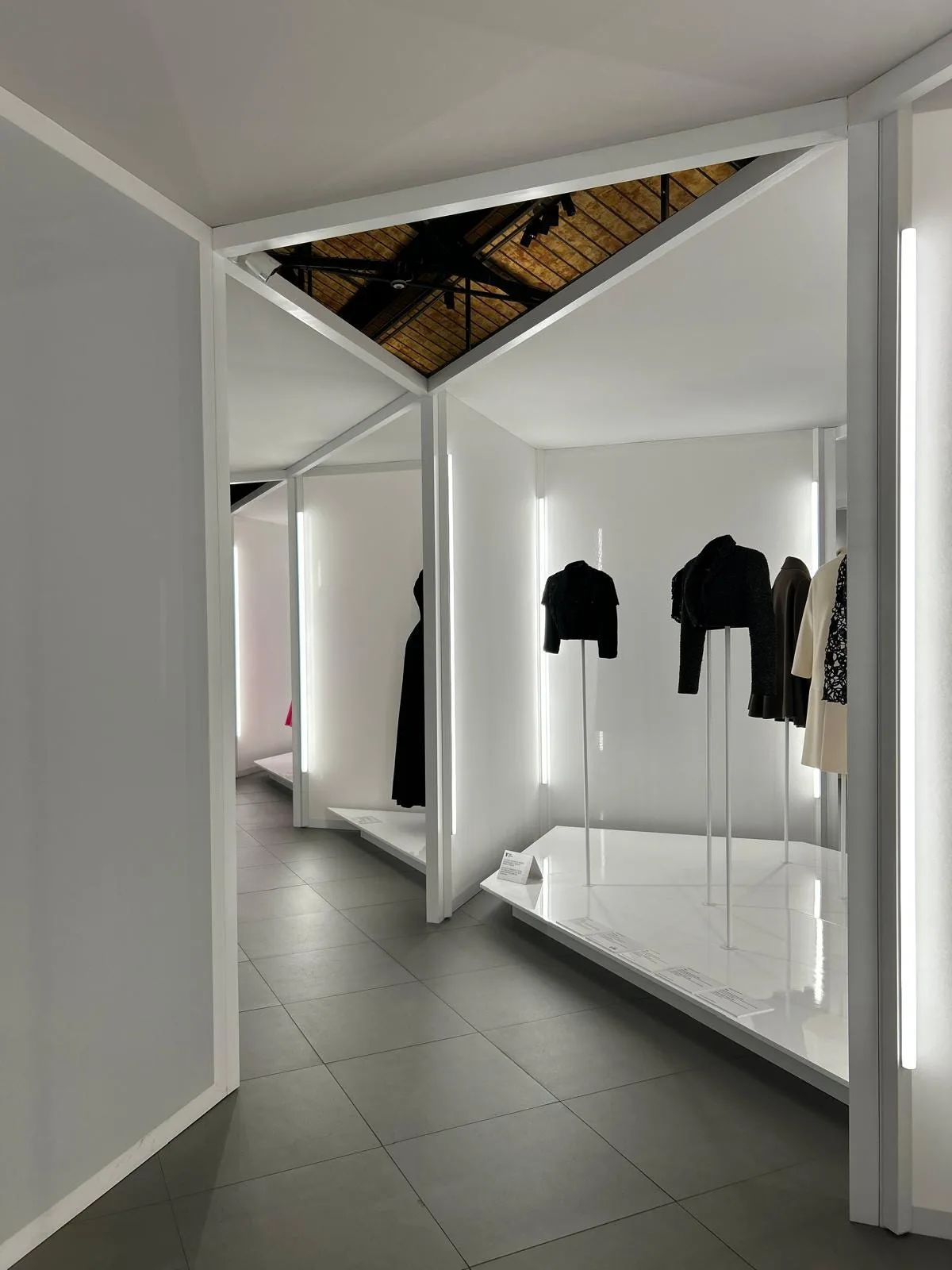
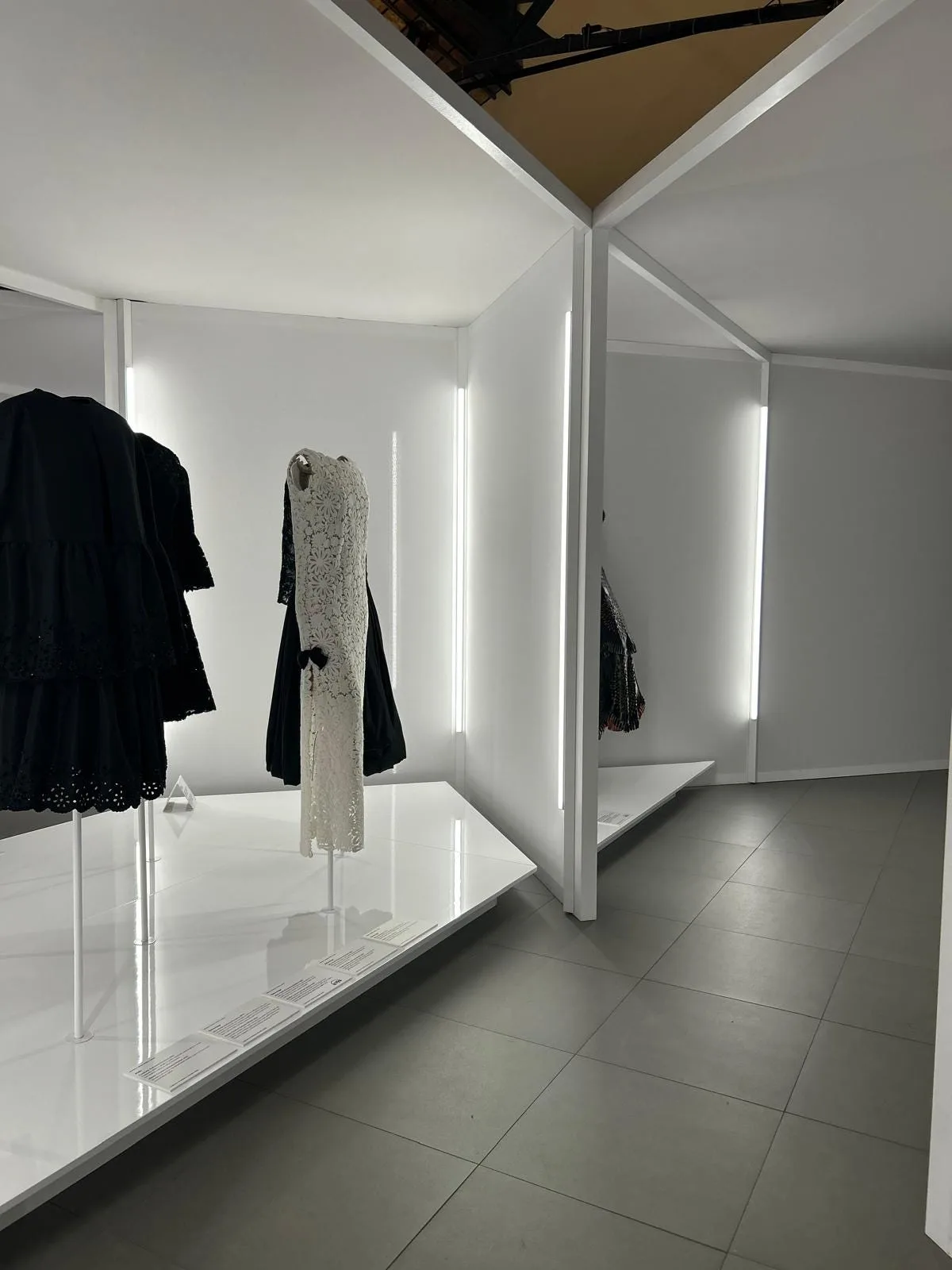
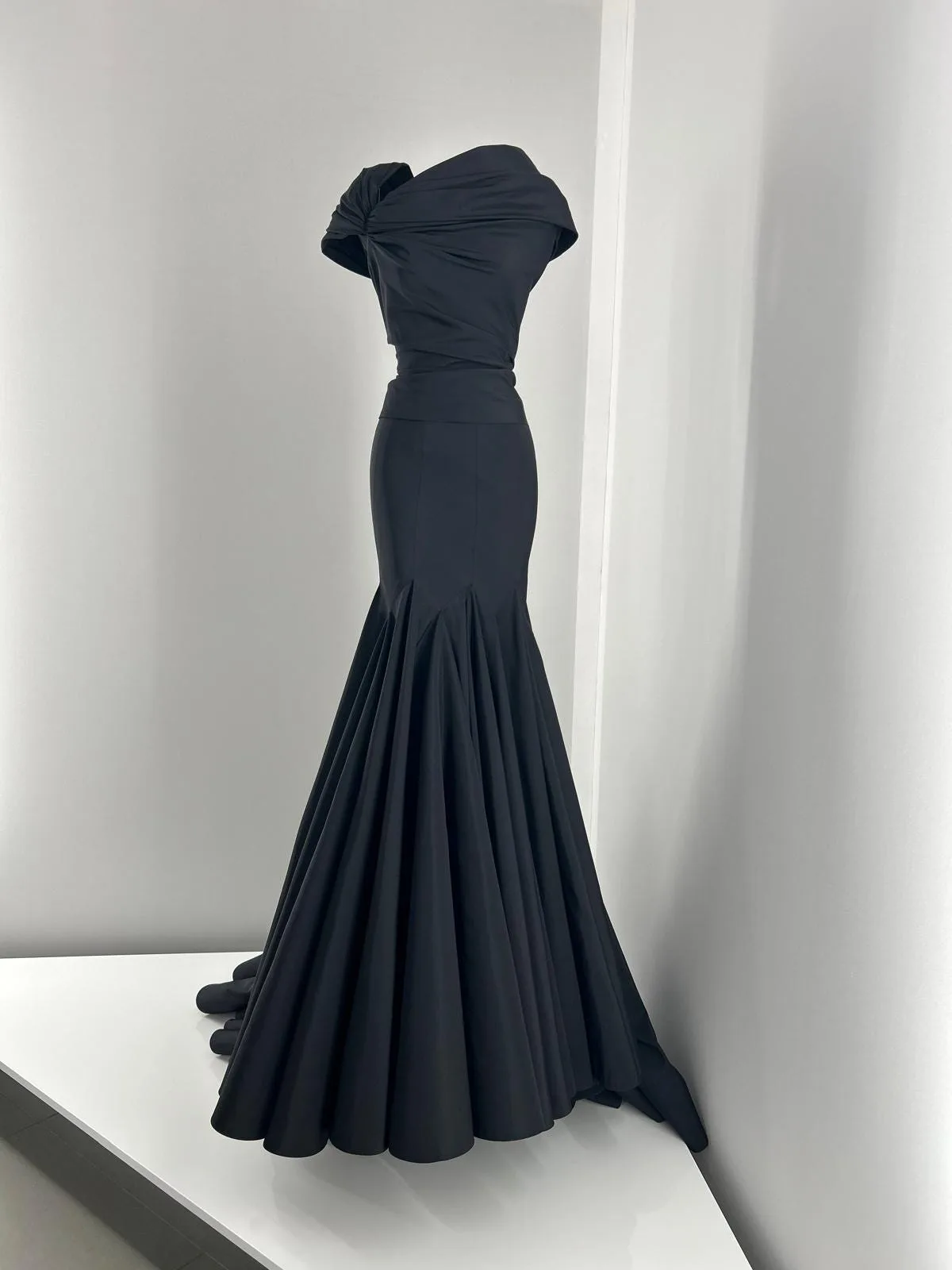
The exhibition in itself is relatively small, but it has a certain gravitas. A collection of pieces dating between the 50s and more recent years, made in black and traces of other colours for some of the pieces. I learned that Balenciaga was using the brand’s signature black since very early days. He was considering black a royal colour, as when he was young this was one of the most expensive dyes to get a hold of. It represented wealth and taste. I was suprised to discover that black wasn’t a modern colour as I thought, associating it in my head with techwear and new age avant garde, but this gauge for style, luxury and non-conformism well before the 50s. He definitely wasn’t the first to use it, but he gave it its own personality.
If I’m being honest, I don’t believe I had much of a personality in high school. No one wants to admit such thing to themselves, yet it’s the truth. In my small city in Romania there wasn’t much focus on culture, art or learning at that age. Kids wanted to drink, hang out and date. I was no different, as a mere product of my environment. You could see it in the clothes we were wearing. There was no interest in colours, style or alignment with our interests. It was crop-tops, tight jeans, short skirts and deep cleavages. We were wearing black as it was easier to combine pieces, not out of love for the classy and chic. It’s unfortunate. In a country with a culture so heavily impacted by traditionalist views, we were dressing for the boys, not for the love for fashion. Not for ourselves.
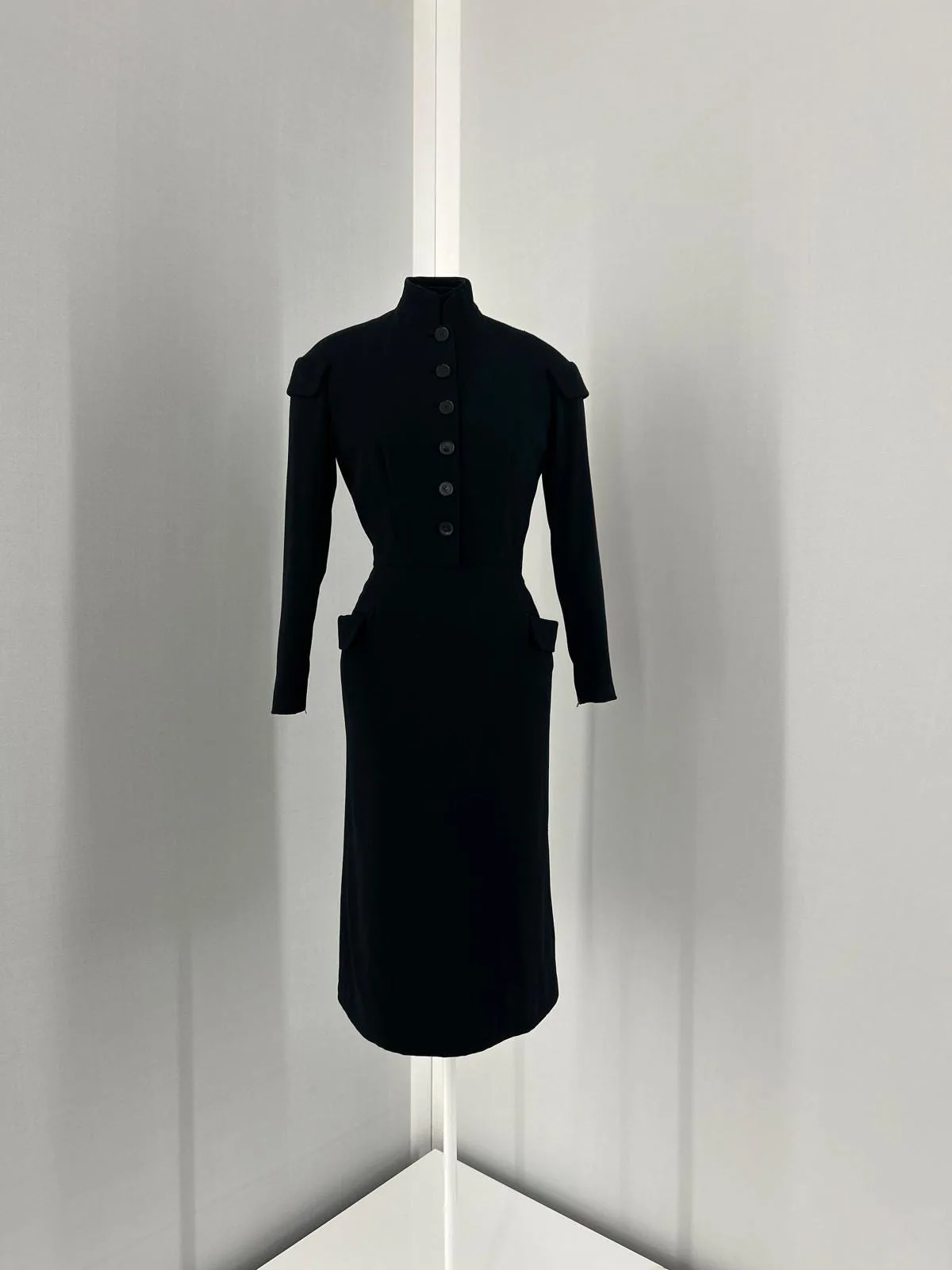
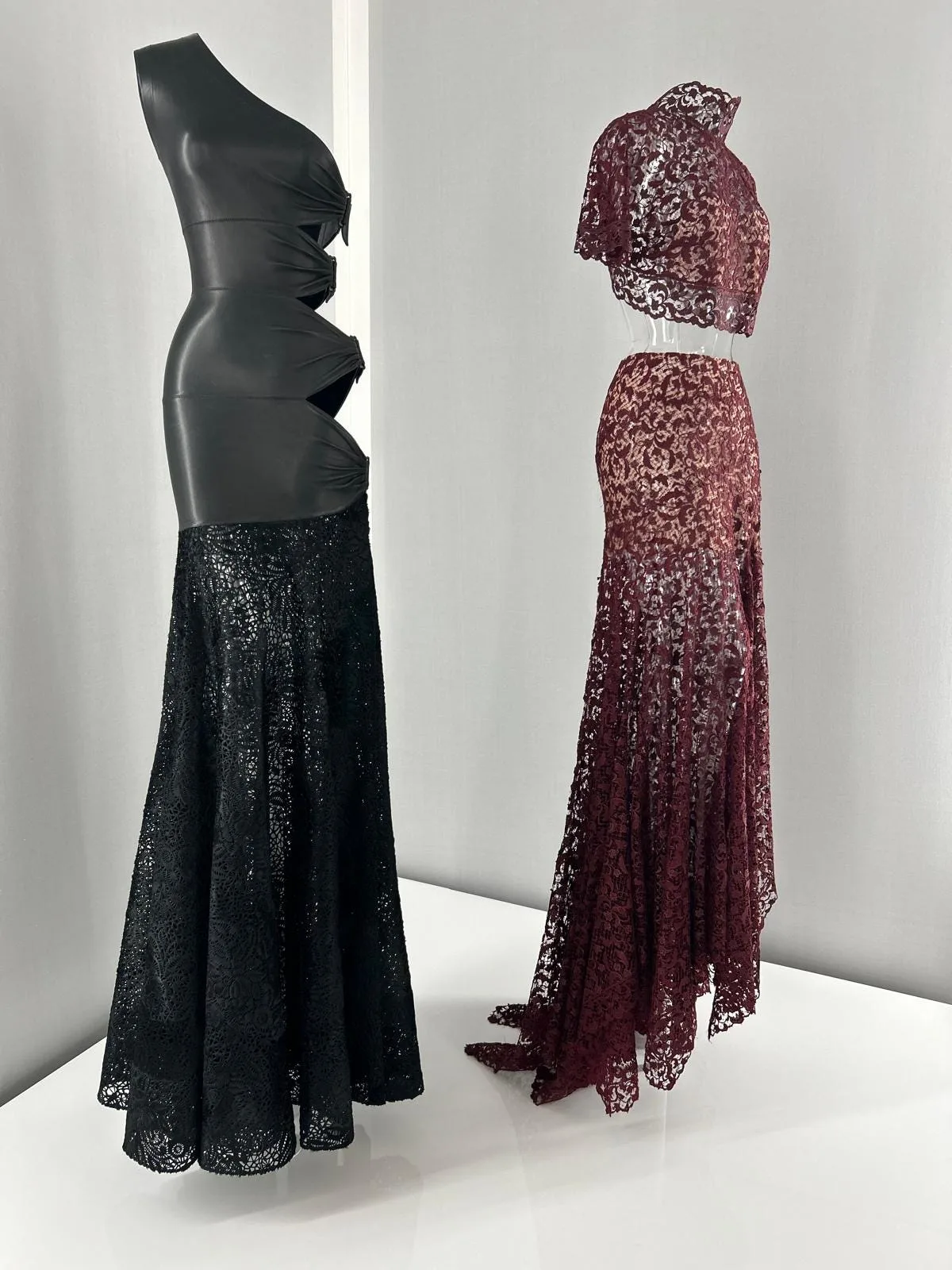
Balenciaga was using black to bring shape to life. He believed that colour can take away from volume and from shape, so he was oftenmost using black as a delivery method, a modest medium of showcasing the greatness of his sewing. The rooms beautifully illustrated the contrast between their mastery: Balenciaga, the architect who used fabric to build space around the body, and Alaïa, the sculptor who used it to caringly define the female form, sculpting it like a second skin. Shapes are what carved Balenciaga’s monumental fame, after all. In their peculiarity and phisics-defying nature, they must have been revolutionary at the time.
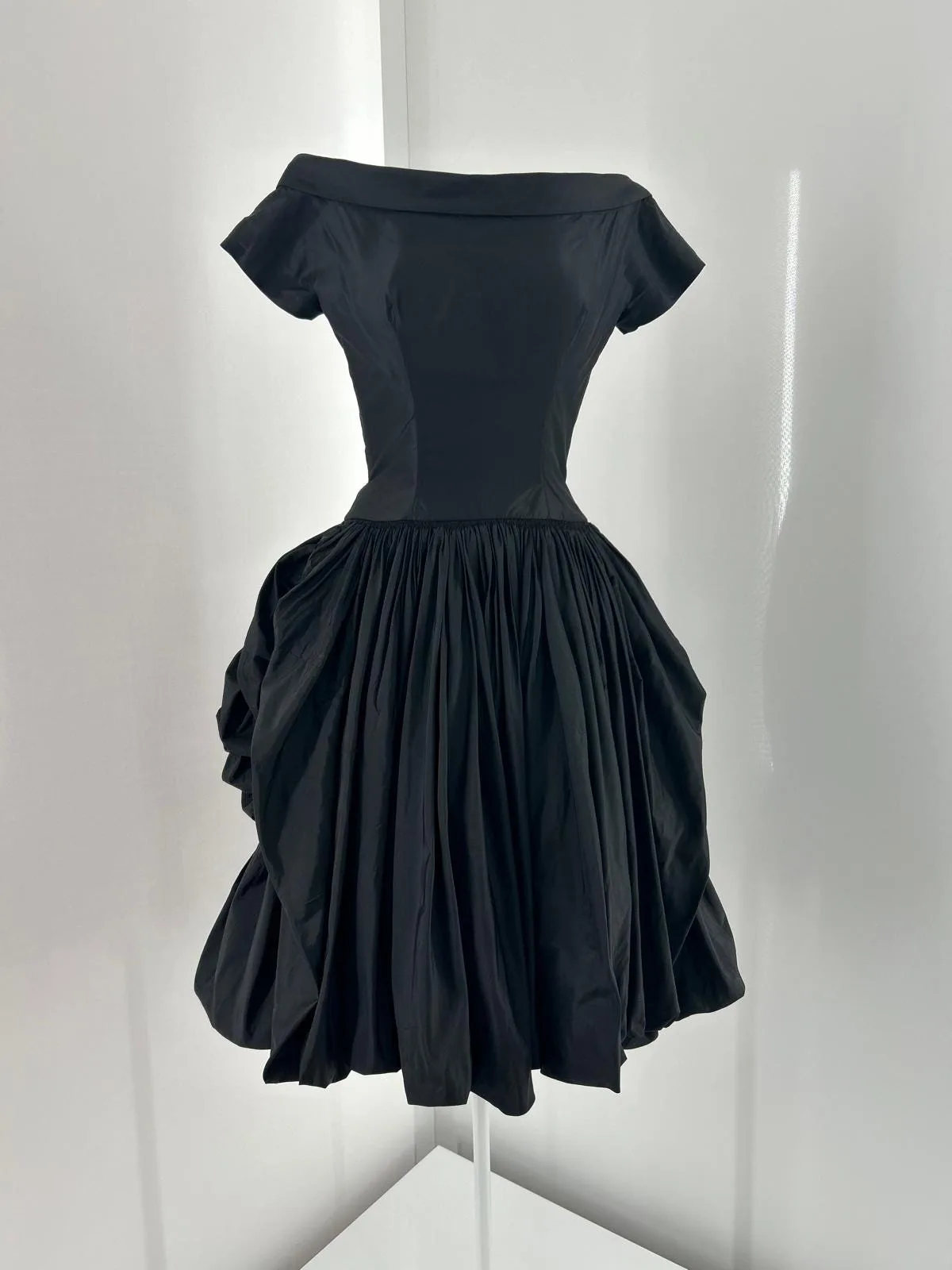
At 17 I wouldn’t even have considered wearing creative shapes, garments diverging even in the slightest from the ordinary . I was forcing myself in clothes that I taught myself to like, molding on my body in all the mainstream ways and places. Today, my mind is searching for a piece of my soul in every single pieced I wear: flowy, asymmetrical, with big shoulder pads and interesting fabrics - atypical garments for an atypical mind which refuses to conform. To please. Dressing up is not putting up a show for platitudinous validation, but showing up for myself authentically. It’s not about hiding curves and skin either. It’s a different flavour of feeling attractive, less performative. A difference audience is present for this show.
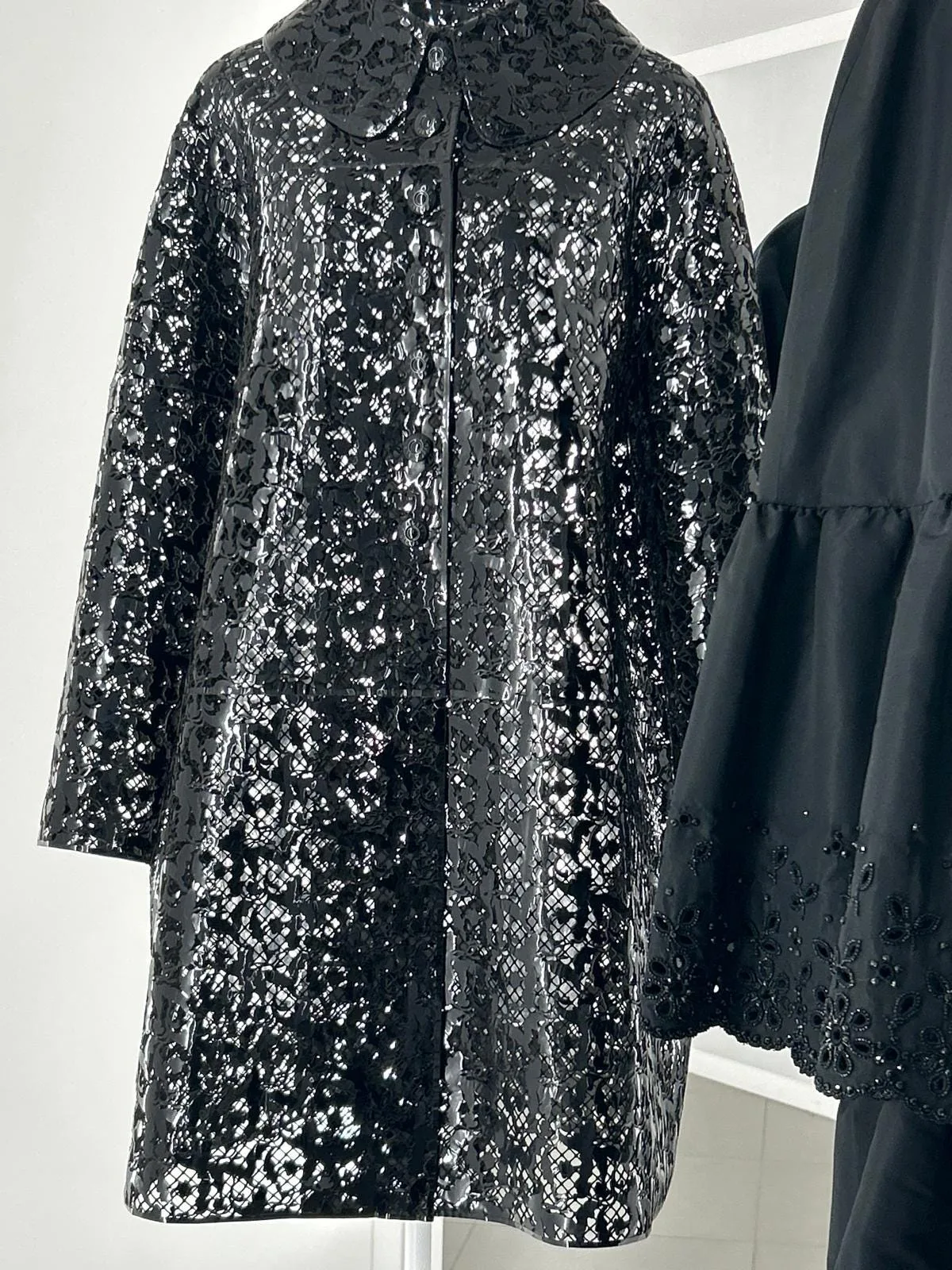
The entire room felt like a show, as if we were strutting down the runway, in a white corridor with gleaming walls and lights, where the mannequins seemed to come to life. I was mesmerized by the garments’ shape, elegance and timeless look. These designs can be spotted in high-end fashion to this day, although there is something to be said about the quality of clothing in today’s landscape. There is something profoundly moving about the impeccable state of these seventy-year-old garments.
It is staggering to realise they might have vanished into obscurity, disposed of like nothing more than pieces of cloth, had a young Alaïa not rescued them when the atelier’s doors were abruptly shuttered in 1968. A Tunisian-born designer who had originally trained as a sculptor, Alaïa became a legendary "rebel" of the fashion world, famously refusing to follow industry schedules and choosing instead to work with his hands until a garment was technically perfect. His eye for fashion and admiration for Balenciaga’s work enabled this collection to exist today, showcasing his view of fashion as engineering, placing focus on sturdy seams and shapes that defy gravity.
I’ve had to defy myself some of the values I was raised with. Leaving was the first step, but personal change attuned with the new environment was the challenge. My relationship with fashion was quite painful at first, involving comparison, frustration and hopelessness. It never felt authentic enough, as my mind would still hold me in tiny squares, while I was watching the world around me display such efortless beauty and style. Shopping days were particularly cruel, leading to tears in changing rooms and long, hard looks into the heavily-lit mirrors.
Analysing these masterpieces feels bitter-sweet. Beautiful and inspiring, while also exhuding nostalgia for times where fashion was looked at in a different way. Not to be said that rejecting change and new ideas is to be embraced, but the ideology behind “Fashion as a craft, not as a brand” is something that I don’t believe we should have given up. It’s definitely very refreshing to see such craftsmanship today, in a society heavily-reliant on fast-fashion, poor quality, mass production and sweatshops.
Time eventually fixed it - I got to meet myself all over again while engaging with learning about fashion from every source that would made itself accessible to me. I took a sustainability course and wrote academic essays about the intersectionalism between clothes and capitalism. I went to exhibitions, impatiently taking notes of every single aspect I would discover and learn about. I turned the stressful shopping days into cathartics experiences, going to vintage shops and couture boutiques, taking in the people around me, analysing their every move. It all started to fall into place as I was unravellign this web of concepts and ideas. Today I’m proud of the style I created and the person I’m presenting. Built on years of insecurity and fighting against deeply rooted norms, yet now transformed.